
Grow more and improve crop quality
Better plant nutrition can support higher yield, heavier grain, and better crop quality.

 Agri Go Pro
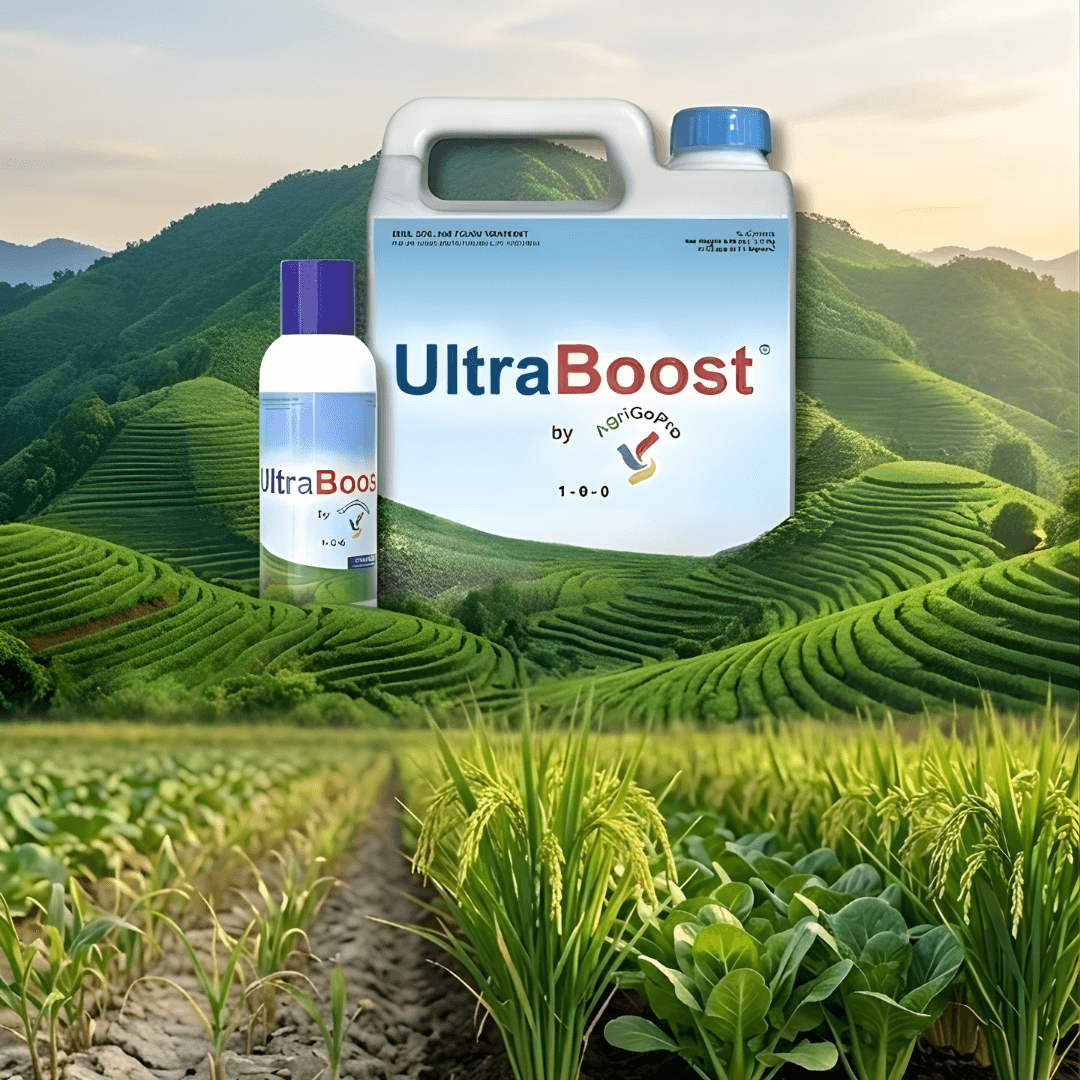
An FPA-registered crop prebiotic for farms that use regular fertilizer and crop inputs.
Better plant nutrition can support higher yield, heavier grain, and better crop quality.
Boosts helpful soil bacteria that break down crop waste. This helps build humus and makes soil easier to work and drain.
The source reports up to 5,000% more native microbe activity within 72 hours than untreated soil.
The source reports up to 60% more nutrient release than untreated soil. This helps crops use nutrients from the soil and fertilizer.
A soil test may show that you can cut phosphorus (P) and potassium (K) fertilizer by 30% or more.
Supports the whole plant as it grows and helps reduce stress from harsh weather.
Helps limit the yellowing that can happen after glyphosate use. Farmers call this “yellow flash.”
Helps lower the amount of sodium in your soil.
Made from many kinds of helpful bacteria that work with or without air. It works in loose, well-drained soil and tight soil.
Provides micronutrients, proteins, enzymes, amino acids, and complex carbohydrates that regular N-P-K fertilizer does not provide.
Apply it with other liquid sprays, pesticides, herbicides, fungicides, or regular fertilizer. Use a ground sprayer, aircraft, or fertigation system.
When stored the right way, it keeps its strength for four years.
Apply while leaves, stems, and roots are growing fast.
Use it as flowers, fruit, or pods start to form.
Apply while grain is filling, based on the guide for your crop.
| Crop | Vegetative | Pre-flowering | Fruiting | During picking |
|---|---|---|---|---|
| Rice (Palay) | 10–15 DAT 150 ml/KS | 35–40 DAT 150 ml/KS | — | — |
| Corn (Mais) | 20–30 DAT 150 ml/KS | 40–50 DAT 150 ml/KS | — | — |
| Ampalaya | 20 DAT 80 ml/KS | 40 DAT 100 ml/KS | 100 ml/KS | 60 DAT onward |
| Calabash (Upo) | 15–20 DAT 100 ml | 40 DAT 100 ml/KS | — | — |
| Eggplant (Talong) | 15–25 DAT 80–100 ml/KS | 30–45 DAT 80–100 ml/KS | 55–60 DAT 80–100 ml/KS | 65 DAT onward |
| Chili (Sili) | 15–25 DAT 80–100 ml/KS | 30–45 DAT 80–100 ml/KS | 55–60 DAT 80–100 ml/KS | 65 DAT onward |
| Onion (Sibuyas) | 20–25 DAT 80–100 ml/KS | 40–50 DAT 150 ml/KS | — | — |
| Pechay / leafy vegetables | 10–15 DAT 80–100 ml/KS | — | — | — |
| String beans (Sitaw) | 25 DAT 80–100 ml/KS | 35 DAT 80–100 ml/KS | 50 DAT 80–100 ml/KS | 60 DAT onward |
| Tomato (Kamatis) | 15–25 DAT 80–100 ml/KS | 30–45 DAT 80–100 ml/KS | 55–60 DAT 80–100 ml/KS | 65 DAT onward |
10–15 DAT
150 ml/KS
35–40 DAT
150 ml/KS
20–30 DAT
150 ml/KS
40–50 DAT
150 ml/KS
20 DAT
80 ml/KS
40 DAT
100 ml/KS
100 ml/KS
60 DAT onward
15–20 DAT
100 ml
40 DAT
100 ml/KS
15–25 DAT
80–100 ml/KS
30–45 DAT
80–100 ml/KS
55–60 DAT
80–100 ml/KS
65 DAT onward
15–25 DAT
80–100 ml/KS
30–45 DAT
80–100 ml/KS
55–60 DAT
80–100 ml/KS
65 DAT onward
20–25 DAT
80–100 ml/KS
40–50 DAT
150 ml/KS
10–15 DAT
80–100 ml/KS
25 DAT
80–100 ml/KS
35 DAT
80–100 ml/KS
50 DAT
80–100 ml/KS
60 DAT onward
15–25 DAT
80–100 ml/KS
30–45 DAT
80–100 ml/KS
55–60 DAT
80–100 ml/KS
65 DAT onward
Follow the product label and crop guide. Ask your field partner if you are not sure.
10% - 20%
Reported by farmers and in field trials.
30%
Reported gain in how crops took in and used fertilizer.
20%
Reported gain in how crops held and used water in dry weather.
40%
Reported gain in root mass and depth.
These results came from independent trials. Your results may vary with crop, soil, weather, timing, and farm care.